How well do you know your friend? (Adapting the newlywed game for WL class)

Here’s another simple game that students tend to enjoy and provides opportunities for many reps of a few target structures.   The game is played in pairs.  The object is to know as much about your partner as possible.

  1. Each student sits across from his/her partner.  It works best if you can form two lines facing each other. (See below for alternate versions in large classes)
  2. The partners in one line have a white board, marker and eraser
  3. The partners in the other line put down their heads and/or close their eyes.
  4. An image is projected.
  5. The student with the board writes what he thinks his partner’s opinion will be of the projected image.  I recently used images of food and students had to choose between how gross and how tasty.
  6. The students without the boards open their eyes and , one by one, give their opinions of the image.  If it matches with the partner’s guess, the pair gets a point.
  7. Play continues for several images and then the board is switched to the other partner who now must do the guessing.
  8. The pair with the most points at the end wins.

Notes/alternate versions

  • There are many possible variations on the content used.  Opinions work great.  You can also use random questions.  (What is your partner’s age?  Mom’s name?  Date of birth? Favorite Ninja Turtle? Lunch mod? Class after this one? . . . etc.)
  • For larger classes, an entire row or section of class can try to guess the responses of one group member.  Each person scores individually.

I need a good name for this game.  Any ideas?

Posted in Classroom activities, Games, Uncategorized | 6 Comments

Text message reading

Here’s a fun way to add a bit of spark to reading, especially dialogue/conversation.  Use the website iphonetextgenerator.com to create fake text message conversations.  The site is pretty easy to learn and use.  Each “screenshot” can be downloaded and added to a presentation or printed.  Here’s part of my text conversation with Shakira from early this morning.   As usual, she just wouldn’t leave me alone.

Untitled drawing

It was funny to hear the students’ explanations for how I created the texts.  Most of them believe that I got up at 3:25 in the morning, used two cell phones, changed the contact name of one to Shakira, sent messages to myself and then took screenshots from my phone.  I, of course, insisted that the messages were real and never revealed the secret.

Posted in Reading | 6 Comments

The one-sided phone conversation

Have you ever listened to someone talk on the phone to someone else?  As you listen to half of the conversation, do you wonder what the voice on the other end of the line is saying?  Do you ever try to guess?  I do.  I was doing it the other day as we were in the car and my wife was talking on the phone.  Of course, I was filling in the gaps with nonsense that was not appreciated near as much by my wife as by me.  The experience turned into an activity for class.

A couple disclaimers before I explain:

  1. This activity seems to be very communicative in nature.  You can see my thoughts on communicative activities here.  In short, I believe they should be used sparingly.  However, if you structure it correctly, you can use this activity to provide quality input.
  2. This activity may seem frighteningly similar to a lame textbook task.  In order to avoid that fate, be creative and personal and allow the students room to be creative and personal.

The premise is pretty simple.  Create one half of a phone conversation and tell students to fill in the other half.  Encourage creativity.  There may be some vocabulary/structures you’re hoping to elicit, but there should not be any right or wrong answers.  Then, simulate the phone call with you reading the existing parts and students reading what they’ve written.  Any structure that you want to rep as input should be in the existing conversation, so you can model correct use and guarantee several reps.

Here’s an example in English.  As usual, you’ll need something that fits your class.

  • Hello
  • I’m sitting at my desk at work.
  • No.  I can’t do that.
  • Are you serious?  How did that happen?
  • I can’t believe it.  Will you ever learn?
  • I could be there in 10 minutes.  What should I bring?
  • My uncle is a lawyer.  Should I call him?
  •  Where are you now?
  • Maybe you should hide somewhere.  Do you know a good place where no one will look for you?
  • Ok.  I’ll meet you there in a few minutes.  Don’t do anything else stupid.
  • We’ll see.  I’m pretty disappointed right now.
  • I doubt it.
  • Bye.

Phone-Icon

Posted in Classroom activities, Communicative Activities | Leave a comment

Storytelling Resource

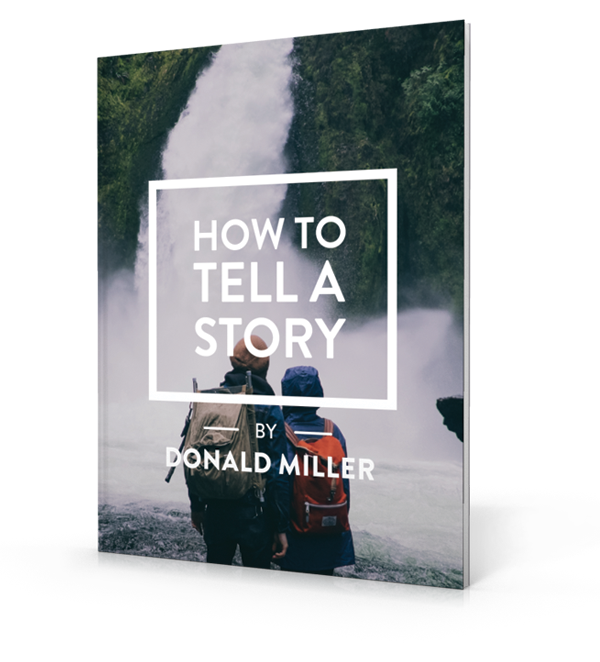
Donald Miller recently released a short (34 pages), free ($0) ebook called How to Tell a Story.  The book starts with some good thoughts about why stories work – why they are so effective in holding attention and communicating.  He also provides and describes formats for telling good stories.  I especially liked his thoughts on the importance of avoiding “noise” in storytelling, which only disengages listeners/readers/students.  The book is short and simple, but I think it is worth a look for TPRS/CI teachers.

Get it here: How to Tell a Story

htts-cover-new

Posted in Reflections, Stories/Storytelling | Leave a comment

El Tenedor (The Fork Game)

download

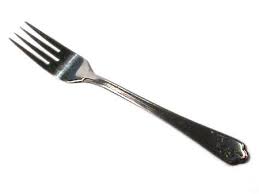
I can’t remember where I first heard of this game.  It is typically played with a pencil and called something like the “True or False Game.”  I use plastic forks and call it “El Tenedor.”  Here’s how it is played:

  1. Students compete against each other, 1 on 1.
  2. They sit facing each other with nothing between them but a fork.
  3. The teacher reads a statement in the Target Language.
  4. If the statement is true, the students grab the fork.  The first student to grab it, earns a point.
  5. If the statement is false, they do not touch the fork.  If a student touches the fork for a false statement, his partner/opponent gets 2 points.
  6. Students keep track of their scores

Simple, right?  A bit violent and chaotic?  At times.  Certain classes may not be ready for “el tenedor.”  For the classes that can handle it, it is a great focused listening practice.

Here is my list of phrases I used as we played it today.  It gives an idea of what types of phrases work well.  Of course, the list is specific to my classes and materials we have seen recently.  You will need your own list.

El Tenedor Game 4/17/14


Posted in Classroom activities, Games | 10 Comments

Another authentic listening example

I stumbled across this beautiful clip recently and had to transcribe it to be used as an authentic listening activity in the future.  In the clip, Jorge Luis Borges discusses art and the restless task of artists and writers.  I think this would work very well with the AP theme of aesthetics and beauty.  Or, it could be extended to discussions and activities surrounding creativity in Spanish.  Many of the activities from my last post could be applied.

Borges Transcription 

Posted in Authentic Resources, Listening | Leave a comment

Authentic Listening Ideas

I start most classes with music.  We listen to songs, complete cloze activities and complete many activities with the lyrics.  We spend about 5 minutes on it at the beginning of class before moving onto the activities for the day.  Every once in awhile, I like to substitute with a different type of authentic listening activity (an interview, a newscast, a commercial).  The students much prefer the songs, but I’ve found a lot of value in the other sources of authentic language.  Here are a few ideas that we are using now with this video:

I distributed the following sheet and we completed these steps:

Anuncio – Los Graduados

1. Start with a Spanish summary of what the students will see in the video.

2. Play the audio while students follow along on the top of side 1.  The entire transcription is in front of students.  Their task is to “keep up” and follow along with the speaker.

3. Play the audio again and pause at random moments.  Students must prove they are keeping up by saying what the next word will be.

4. Fold the paper at the line.  Now, students look at the bottom paragraph and cannot look at the top.  There are certain words in the written text that are different from what is spoken.  As they listen, students put a line through any word that is different.

5. Play audio again while students write the correct word over the crossed out words.

6. With help, students translate the text – individually, in parts or as a class.


Posted in Authentic Resources, Listening | 3 Comments

Yet another analogy

TPRS is a lot like cheese sticks.

My mother was watching our kids a few weeks ago.  My daughter, who just turned three, asked for a cheese stick as a snack.  She tends to be very specific in her requests.  She asked if grandma could split her cheese stick into three thirds.

My mom could not believe that my 3-year-old daughter knew three thirds.    “Are you teaching her fractions?” she asked me when I arrived to pick up the kids.

The truth is that although my daughter is quite intelligent, she doesn’t really “know” fractions.  She knows that she likes her cheese stick divided into three parts and that each part is called a third because that’s what we tell her every time we give her one.   In my mom’s mind, in order to say three thirds, my daughter needed to know many mathematical functions.  In reality, she just needed to know that the three parts of a cheese stick are called thirds.

Language is not that different.  For example, consider this phrase:

Quiero que seas mi amigo. (I want you to be my friend)

I used to believe that to use such a phrase, students must understand many rules about the subjunctive mood.  They need to know that a desire is being expressed, which requires subjunctive.  We need to examine all desire type trigger phrases.  There are three steps to forming a subjunctive verb.  Let’s start with AR verbs and practice them for awhile.  Then, we’ll move to ER/IR verbs and finally to irregulars (DISHES).  After sufficient practice with the verb ser in the subjunctive, we can say “Quiero que seas mi amigo”.

The big, altering, liberating shift with TPRS has been to move away from the above list of steps/rules to this:

Quiero que seas mi amigo = I want you to be my friend

Now, let’s use it . . . a lot.

The rules may be useful later when we want to extend this concept to other ideas, but let’s start by attaching meaning and providing input.

So, if a 3-year-old can use the term three thirds, can a level 1 Spanish student say, “Quiero que seas mi amigo”?  Why not?

Posted in Reflections, Uncategorized | 4 Comments

El corazón de la madre / La Coeur de Ma Mère

Here’s a story based on an authentic song in French.  Christy Miller, the French teacher at our school was teaching a unit based on the song.  I liked the story so much that I decided to create a Spanish version.  Of course, this works better in French because of the authentic resource (song).

The basic story is that a man falls in love with a woman.  The woman asks him to kill his own mother and bring her heart to his lover.  He does and as he’s running back to his lover with the heart in his hand, he trips and falls.  The heart of his mother rolls on the ground and then begins to talk.  It asks, “Are you all right, my son?”  “Does anything hurt?”

I asked the story in class one day in the present tense.  We focused on the structures “se llevan bien – they get along well” and “necesito que me hagas un favor – I need you to do me a favor.”  The second day, we read the story in the past tense.  Here is the text:

El corazón de la madre

Here’s the song:

Posted in Reading, Stories/Storytelling, Story Scripts | 1 Comment

OFLA Workshop

If you are a language teacher in Ohio or will be visiting our state for the OFLA conference in April, please consider attending my workshop on Thursday April 10 at 5:30pm.

The title of the workshop is Creating Materials for an Engaging WL Classroom.  There will be two main components:

1. Using our students as a context for instruction: Demonstrations on how to get to know our students well and use their interests, ideas, and beliefs to make our material relevant.

2. Creating materials: One way to ensure that our materials will be relevant is to create them (or at least adapt them) ourselves.  I will demonstrate effective methods for harnessing our own creativity to develop several types of materials.  I will offer examples of my own work to be used as a starting point.  We will also examine how to mesh teacher-created materials with authentic resources.

Please consider attending and/or sharing with friends and colleagues.

Title: Creating Materials for an Engaging WL Classroom

Day/Date: Thursday, April 10, 2014

Time: 5:30pm-8:30pm


Posted in Professional Development | Leave a comment